
HVAC & R Systems
Efficient HVAC & R systems ensure indoor comfort, air quality, and energy optimization. Below are the key systems:
1. Air Handling Unit (AHU)
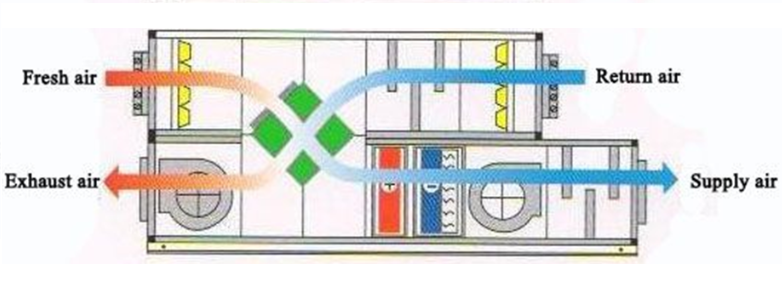
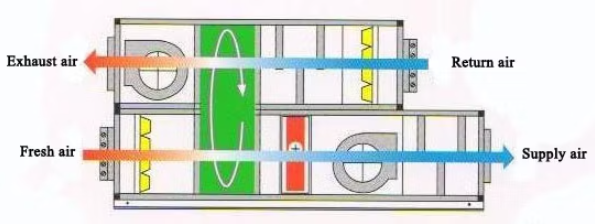
AHUs regulate and circulate air by conditioning it with heating, cooling, filtering, and humidification before distributing it through ducts.
2. Package
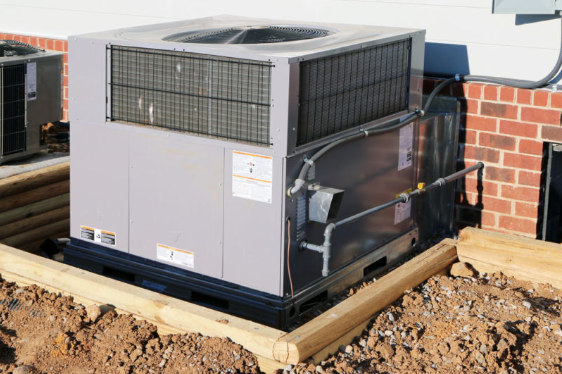
A packaged system is a single-unit system for compact spaces, integrating heating and cooling.
3. Roof Top Unit (RTU)
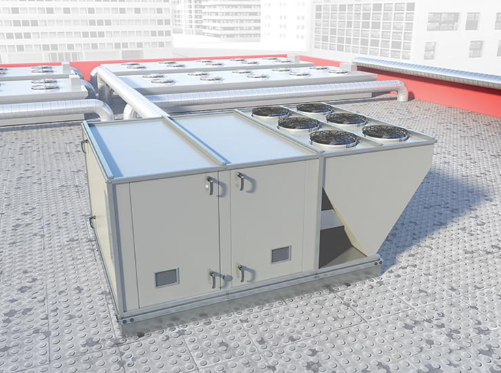
RTU is a self-contained system installed on a building’s roof, designed for heating, cooling, and ventilation. It conditions air and distributes it through ductwork to the interior space. RTUs are commonly used in commercial and industrial buildings due to their space-saving design, ease of maintenance, and energy efficiency. On the contrary, AHU is a part of a larger system that requires external heating/cooling sources.
4. Heat Pump
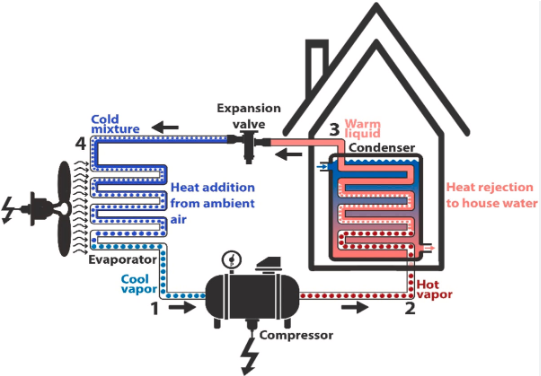
A heat pump is a device that transfers heat between indoor and outdoor environments using a refrigeration cycle. It provides both heating and cooling by reversing the refrigerant flow. In heating mode, it extracts heat from outdoor air, water, or the ground and delivers it indoors. In cooling mode, it removes indoor heat and releases it outside.
5. Split
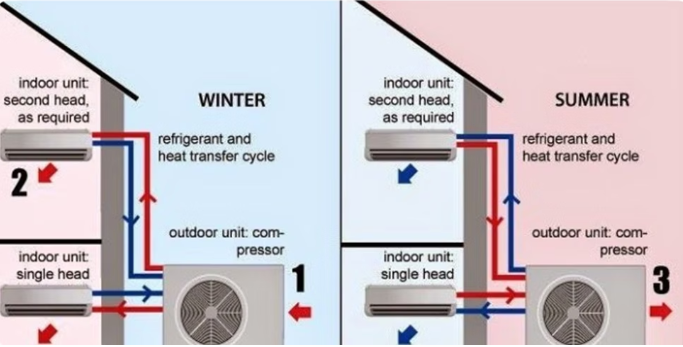
Split systems are common in homes, with separate indoor and outdoor units for heating and cooling.
6. Cooling Tower
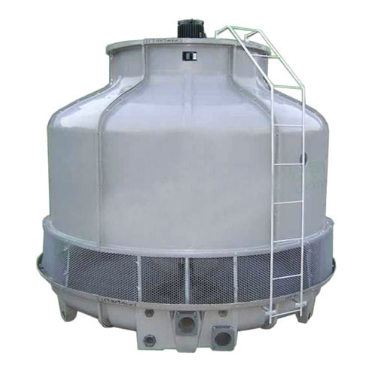
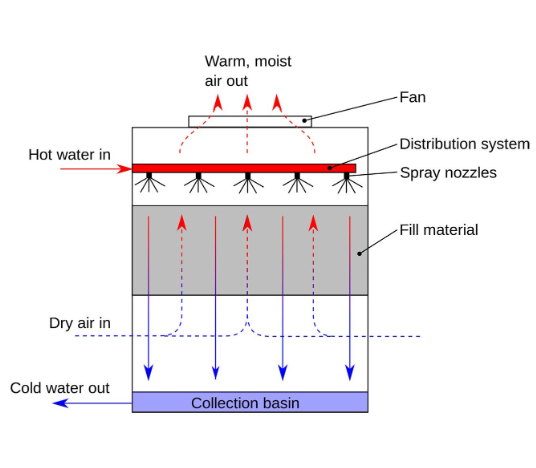
A cooling tower is a heat rejection device that removes waste heat from a building or industrial process by evaporative cooling. It transfers heat from the circulating water to the air, lowering the water temperature before recirculating it to the chiller or condenser.
7. Air Washer or Evaporative Cooler
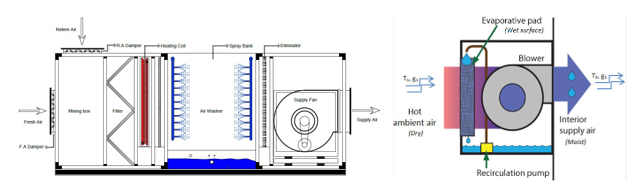
Both cooling towers and air washers operate on the evaporative cooling principle, where heat is removed by water evaporation. However, their objectives differ: In a cooling tower, warm water from a system (e.g., a chiller or industrial process) is sprayed or distributed over a large surface, and air is passed through. Some of the water evaporates, absorbing heat and cooling the remaining water, which is then recirculated for cooling equipment. Here, cooled water is the main goal. In an air washer, water is sprayed into an airstream, and as some of it evaporates, it reduces the air temperature while increasing humidity if needed. The cleaned, cooled air is then supplied to the conditioned space. Here, cooled air is the main goal. In both cases, the fundamental principle is heat removal through water evaporation, but the intended outcome differs—cooled water in cooling towers vs. cooled and conditioned air in air washers.
8. Chilled Beam
Chilled beam systems use water-based heat exchange embedded in ceiling beams to provide heating or cooling by convection and radiation, rather than relying solely on forced air. These systems reduce ductwork requirements, improve indoor comfort, and enhance energy efficiency, especially in spaces with high sensible loads. Both active and passive chilled beams can be integrated into modern building designs for quiet and efficient operation.
9. Fan Coil Unit (FCU)
Fan coil units consist of a heating or cooling coil combined with a fan to condition a space. Typically connected to a central chilled- or hot-water loop, FCUs provide localized thermal control with minimal ductwork. They are flexible, cost-effective, and widely used in hotels, apartments, and offices, offering both heating and cooling in individual zones.
10. Hydronic (Chiller-Boiler / Water-Loop)
Hydronic systems transfer heat using water or water-glycol solutions through pipes, rather than air. Chillers provide cooling while boilers or heat pumps supply heating, distributing thermal energy via water loops to terminal units. These systems offer efficient heat transfer, compact piping, and are ideal for multi-zone buildings requiring precise temperature control.
11. Dedicated Outdoor Air + Local Terminal
Dedicated outdoor air systems supply fresh ventilation air separately from local heating/cooling units, such as FCUs, VRF, or chilled beams. By decoupling ventilation from thermal conditioning, DOAS improve indoor air quality, allow precise zone control, and reduce energy consumption associated with over-conditioning of occupied spaces.
12. Hybrid HVAC
Hybrid systems combine multiple heating and cooling sources — for example, a heat pump for moderate conditions and a boiler or furnace for extreme temperatures. This approach optimizes energy use and cost, enhances system flexibility, and reduces carbon footprint, providing reliable comfort across varying climate and building load conditions.
13. VRF / VRV
VRF (Variable Refrigerant Flow) or VRV (Variable Refrigerant Volume) systems are advanced HVAC technologies where a single outdoor unit serves multiple indoor units, each receiving the exact amount of refrigerant needed. This allows precise zone control, high energy efficiency, and simultaneous heating and cooling in different zones. They are widely used in modern commercial and residential buildings due to their flexibility and low operational cost. VRV is Daikin’s trademarked name, while VRF is the general industry term for the same technology, widely used in modern commercial and residential buildings.
14. Refrigeration Storage Warehouses
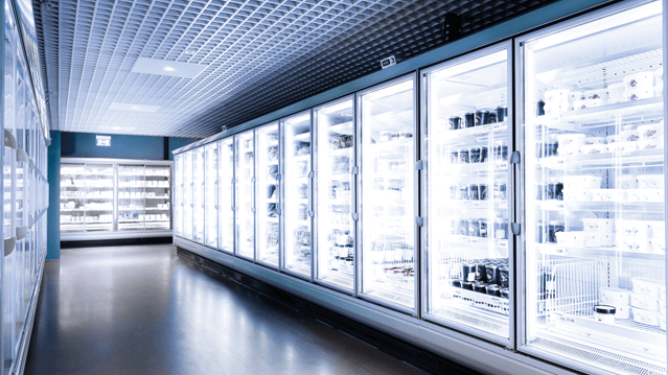
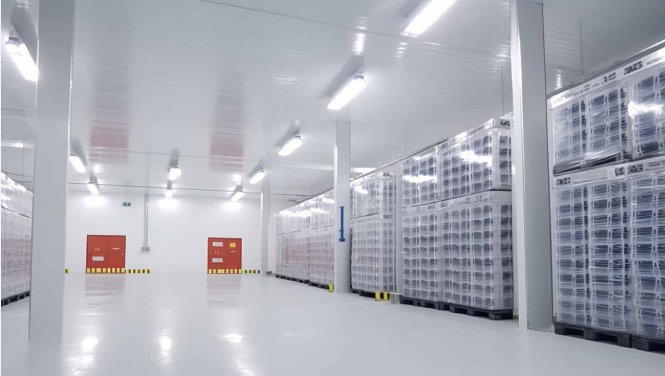
Industrial and commercial cold and frozen storage warehouses are temperature-controlled facilities designed to preserve perishable goods. They serve industries such as food, pharmaceuticals, and chemicals, ensuring product safety and regulatory compliance. Cold Storage (0 to 10°C): Ideal for fresh produce, dairy, and beverages. Frozen Storage (-18°C and below): Preserves meat, seafood, and pharmaceuticals.
15. District Heating & Cooling
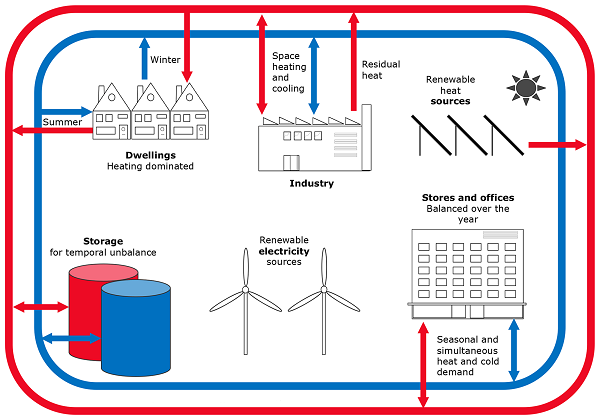
A district heating and cooling system is a centralized system distributing thermal energy to multiple buildings.
Each system is designed for specific applications, ensuring optimal performance, energy efficiency, and indoor air quality.