
Fluid Dynamics
Fluid dynamics describes how fluids move and interact with their surroundings. Regardless of whether the flow is natural, forced, or a combination of both, a pressure gradient is the fundamental cause of fluid motion. To understand and predict fluid behavior, we typically examine the problem from three main perspectives: physical, mathematical, and computational.
1. Physical Aspect – Governing Equations
The physical description of fluid motion is based on fundamental conservation principles:
- Conservation of Mass (Continuity Equation)
- Conservation of Momentum (Navier–Stokes Equations)
Continuity Equation
![\frac{\partial \rho}{\partial t} + \Bigg[ \frac{\partial (\rho u)}{\partial x} + \frac{\partial (\rho v)}{\partial y} + \frac{\partial (\rho w)}{\partial z} \Bigg] = 0](https://buildingenergylab.com/wp-content/ql-cache/quicklatex.com-74b69a56c396fa6adf32751cc3202cf0_l3.png "Rendered by QuickLaTeX.com")
where:
- t = time
- ρ = fluid density
- u,v,w = velocity components in x,y,z directions
Navier–Stokes Equations



where:
- ∇2 =
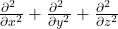 = Laplacian operator
 - ρ = fluid density (variable for compressible flow)
- u,v,w = velocity components in x,y,z directions
- p = pressure
- μ = dynamic viscosity
- fx,fy,fz = body forces per unit mass (e.g., gravity)
Together, these equations describe how mass, momentum, and forces evolve within a fluid.
The Navier–Stokes equations represent the balance between inertial forces, pressure forces, viscous forces, and external body forces. They form the core of modern fluid mechanics and serve as the foundation for all modeling and simulation efforts in engineering.
2. Mathematical (Numerical) Aspect
In most practical engineering problems, the governing equations do not have exact or analytical solutions—especially when dealing with complex geometries, unsteady flows, or turbulence.
Therefore, the partial differential equations (PDEs) are discretized into systems of algebraic equations using numerical methods such as:
- Finite Volume Method (FVM)
- Finite Difference Method (FDM)
- Finite Element Method (FEM)
This mathematical transformation allows the continuous equations to be solved in an approximate but highly accurate numerical form.
3. Computational Aspect
Once the PDEs are converted into algebraic equations, they must be solved using computational algorithms. This is the basis of Computational Fluid Dynamics (CFD).
CFD employs:
- iterative solvers
- numerical schemes
- mesh/element structures
- convergence controls
to compute the fluid velocity, pressure, temperature, and other field variables.
4. Incompressible vs. Compressible Flow
Depending on whether the fluid density is constant or variable, these governing equations are solved in two frameworks:
- Incompressible Flow: density (ρ=cte) is constant → pressure-based solution methods → harder to solve because the equation of conservation of mass does not help with computation; it just adds a constraint that should be satisfied.
- Compressible Flow: density (ρ) changes with pressure/temperature → density-based solution methods → easier to solve because the equation of conservation of mass includes one more equation that helps with computation.
5. Laminar vs. Turbulent Flow
Fluid flow can exist in two major regimes:
- Laminar Flow:
Smooth and orderly motion where momentum is transferred primarily through molecular viscosity. - Turbulent Flow:
Chaotic, three-dimensional motion dominated by eddy viscosity, large fluctuations, and strong mixing.
The transition between laminar and turbulent flow is one of the least understood regions in fluid dynamics, and we have limited predictive capability for this transitional behavior.
6. Turbulence Modeling and/or Simulation
Turbulence is too complex to solve directly in most practical systems, so different approaches are used:
- RANS – Reynolds-Averaged Navier–Stokes
- 100% modeling approach
- Solves time-averaged equations with turbulence models (e.g., k–ε, k–ω).
- Most common in industry and engineering applications.
- DNS – Direct Numerical Simulation
- 100% simulation approach
- Resolves all turbulent scales without modeling.
- Extremely expensive computationally; used only in research.
- LES – Large Eddy Simulation
- Hybrid approach: simulation + modeling
- Large eddies (energy-containing structures) are simulated,
small eddies (dissipative scales) are modeled below a cutoff size. - More accurate than RANS, less expensive than DNS.
7. Coupling with Energy Equation
When fluid properties—such as viscosity, density, or thermal conductivity—change with temperature, the energy equation has to be solved simultaneously with the mass and momentum equations.
3-D energy equation is:
![\frac{\partial (\rho c_p T)}{\partial t} + \Bigg[ \frac{\partial (\rho c_p u T)}{\partial x} + \frac{\partial (\rho c_p v T)}{\partial y} + \frac{\partial (\rho c_p w T)}{\partial z} \Bigg] = k\left( \frac{\partial^2 T}{\partial x^2} + \frac{\partial^2 T}{\partial y^2} + \frac{\partial^2 T}{\partial z^2} \right) + \mu\Bigg[ 2\Big(\frac{\partial u}{\partial x}\Big)^2 + 2\Big(\frac{\partial v}{\partial y}\Big)^2 + 2\Big(\frac{\partial w}{\partial z}\Big)^2 + \Big(\frac{\partial u}{\partial y}+\frac{\partial v}{\partial x}\Big)^2 + \Big(\frac{\partial u}{\partial z}+\frac{\partial w}{\partial x}\Big)^2 + \Big(\frac{\partial v}{\partial z}+\frac{\partial w}{\partial y}\Big)^2 \Bigg] + T\Bigg(\frac{\partial p}{\partial t} + u\frac{\partial p}{\partial x} + v\frac{\partial p}{\partial y} + w\frac{\partial p}{\partial z}\Bigg) + \dot{q}](https://buildingenergylab.com/wp-content/ql-cache/quicklatex.com-18a492cf5cc6738963a8127f4f3bfc62_l3.png "Rendered by QuickLaTeX.com")
Where on the LHS of this equation, first and second terms are temporal and advection (spatial) terms, respectively, and on the RHS, first, second, third and forth terms are diffusion (conduction), dissipation (the rate of conversion of mechanical energy due to viscous shear deformation into heat in the fluid), work done by pressure, and thermal source terms, respectively.
8. Engineering Applications and Outputs
Solving fluid dynamics equations provides detailed velocity and pressure fields. These results allow engineers to determine:
- Friction coefficients
- Pressure coefficients
- Pressure drop
- Flow rate
- Sizing of pipes, ducts, and channels in HVAC & utilities
- Turbomachinery design of fans and pumps in HVAC & utilities
- CFD simulation of airflow inside and outside buildings
Additionally, the flow solution provides the information needed for convective heat transfer analysis:
- determining temperature profiles
- computing temperature gradients
- determining thickness of the viscous and thermal boundary-layers